
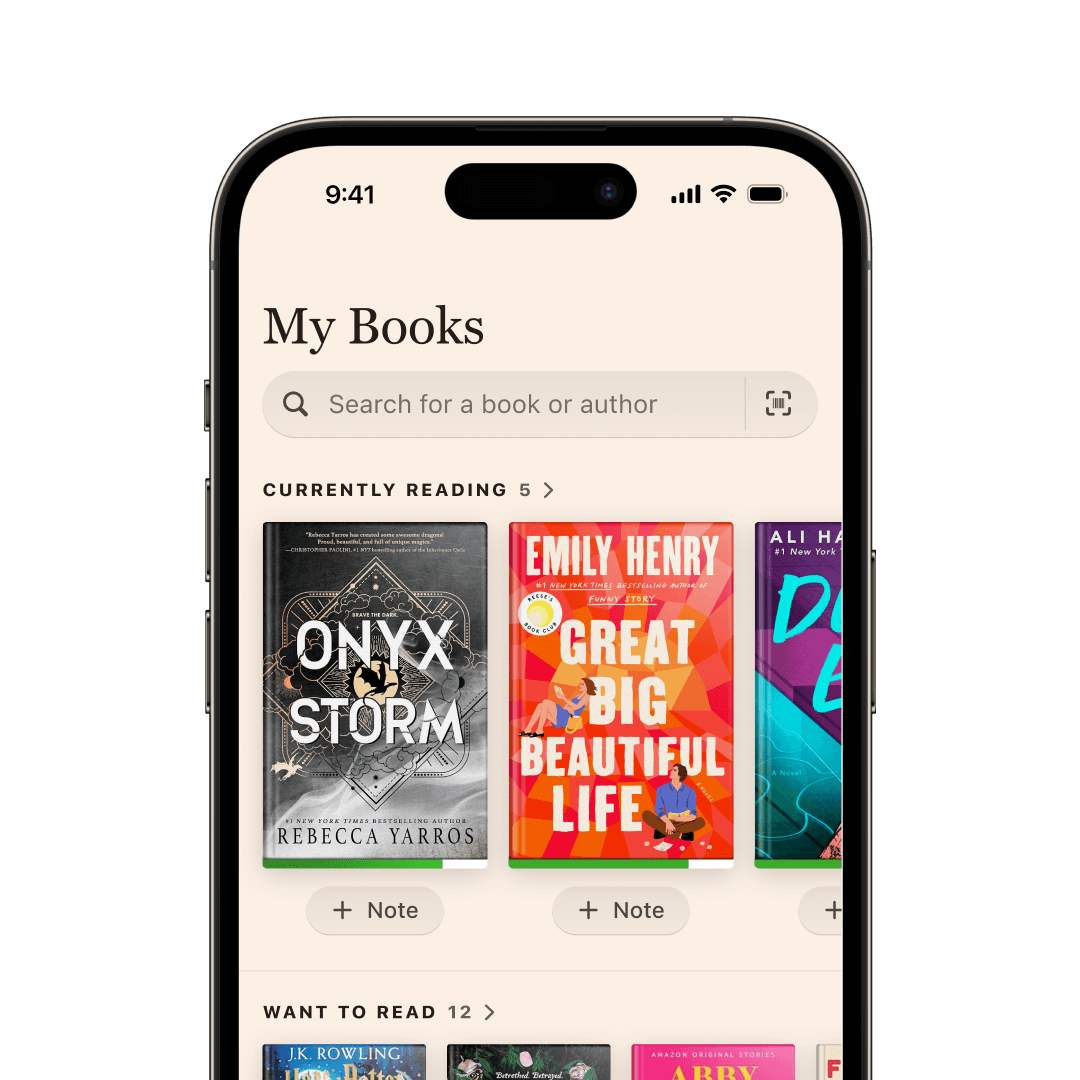
For most of the last decade, "tracking books" has meant one thing: open Goodreads, search for the title, click "Read", give it a star rating. Done. The book is filed. You move on.
It's a workflow that's aging badly. Goodreads launched in 2007. Its UI is from a different internet. Its data export is fragile, its social features are a feed of book covers from strangers, and the experience of actually using it for the thing you care about — remembering what you read — is no better than it was ten years ago.
Here's a more honest look at what a book tracker should do in 2026.
Tracking and journaling are different jobs
The first thing most reading apps get wrong is that they conflate two different needs:
Tracking is about logistics. What am I reading now? What's next? What did I finish this year? It's the spreadsheet view of your reading life.
Journaling is about meaning. What did this book do to me? What did I underline? What do I want to remember? It's the notebook view.
You probably want both. But you want them in the same place — your reading life is one thing, not two — and you want the journaling to be at least as easy as the tracking. Most apps optimize for tracking and treat the rest as an afterthought.
“ The book you remember is not the book you finished. It's the book you wrote about. ”
What's actually worth tracking
The five things that matter the most for almost every reader:
Your TBR. The pile of books you intend to read. This is where impulse buying lives. A good tracker makes it fast to add a book and easy to demote the impulse buys to the bottom.
What you're reading right now. Most people are reading 1–3 books at once. A modern tracker should not assume one-at-a-time.
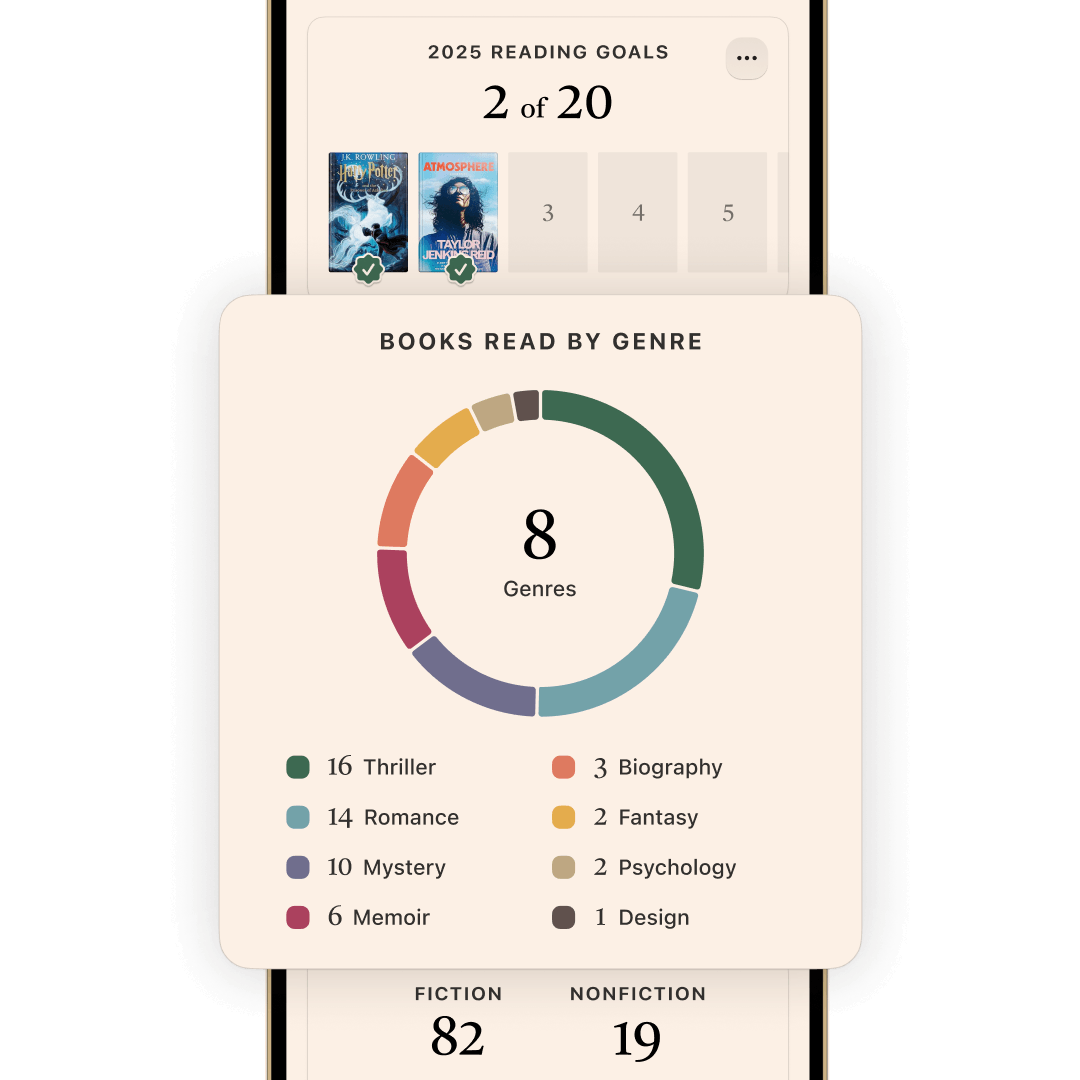
What you finished. Grouped by month or year. This becomes interesting around year two.
What you abandoned (the DNF list). This is data, too. A book you started and put down is a book you learned something about yourself from. Don't hide it.
Formats. Paper, ebook, audiobook. People underestimate how much format affects what they retain. Track it.
What's not worth tracking, in our opinion: precise daily progress (you're reading, not running), or an exact five-star rating for every book you finish. A rating is the most compressed possible summary of a book — it throws away nearly all the information.
Why ratings aren't enough
A five-star rating is useful for one thing: deciding whether to recommend a book to someone else. For everything else — remembering, reflecting, comparing your old self to your new self — it's nearly worthless.
Two examples. You read a difficult book in college and gave it three stars. You re-read it at 35 and it changes your life. Was your rating wrong? No — you were a different reader. But a rating-only system has no place for that story.
You read a book that broke your heart and you can't bring yourself to "rate" it because rating it feels disrespectful. So you don't. So your tracker has no record of one of the most important books of your year.
The fix is not to rate better. The fix is to capture things ratings can't capture.
What to look for in a modern reading app
A short list of features that actually improve reading life, beyond the basics:
Goodreads & Kindle import. If you've been on Goodreads for a decade, your reading history is real data. A good app brings it in cleanly, including your highlights.
Private by default. The best reading apps treat your reading as personal. No public feed, no follower count, no algorithm reordering your library.
Multiple kinds of notes. Quote-only is not enough. You want a place for characters, scenes, vocabulary, questions, and reactions, not just a single "notes" field.
Beautiful enough to use daily. This sounds soft, but a reading app you don't enjoy opening is a reading app you won't open. Type, color, paper textures — these are not decoration. They're what makes the habit stick.
Your data, exportable. Whatever you put in, you should be able to get out. A reading life takes years to build. It shouldn't live and die with one app.
“ I cannot sleep unless I am surrounded by books. ”
The honest answer
The best way to track books you read in 2026 is the same as the best way to track anything else worth caring about: pick the tool you actually want to open, lower the cost of capturing things to nearly zero, and put the meaningful entries first.
For us, the tool is Slovo — partly because we built it, and mostly because we built it to fix the gaps above. But the principle is bigger than the app: stop counting books, and start writing about them. The reading life you'll have in five years depends almost entirely on what you do in the next ten minutes after finishing a book.
Written by Anastasia, Slovo Co-Founder.