
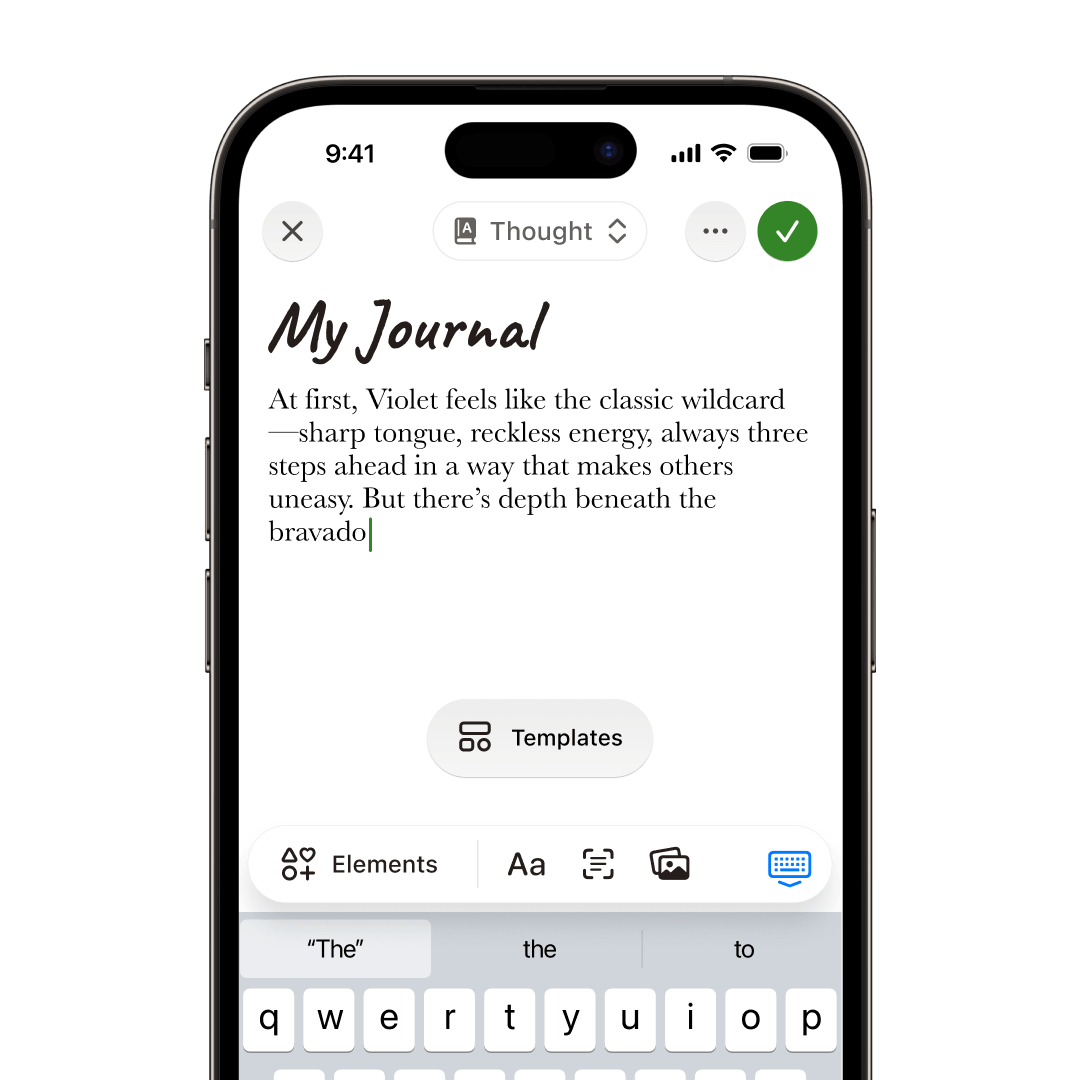
You finished the book. You marked it "read" on the app. You gave it four stars. Six months later a friend mentions the protagonist's name and you nod knowingly, even though you can't actually remember anything about her except that you liked her.
This is the gap a book journal exists to close. A reading tracker is a checklist. A book journal is a memory.
The difference, in one sentence
A reading tracker records that you read a book. A book journal records what you got out of it — the lines you underlined, the scene that gut-punched you on page 142, the character you saw a little too much of yourself in, the question you still don't have an answer to.
Both have a place. But if you read because the books actually mean something to you, only one of them is worth your time.
“ The point of reading isn't to finish a book. It's to be changed by one. ”
What you lose with tracking alone
The science on this isn't complicated. In 1885 the German psychologist Hermann Ebbinghaus published what we now call the forgetting curve: memory of new information drops sharply in the first 24 hours after we encounter it, and continues to fade for weeks afterward unless we engage with it again.
A typical reader finishes a novel in 5–10 hours of focused attention. Then we close the book and immediately start reading the next one. Within a month, most of what we read is gone — the plot blurs, the characters merge, the lines we loved are lost in our highlights folder.
Tracking that this happened — "I finished Normal People in March" — is fine. But the book isn't what you tracked. You tracked the completion.
What a book journal is actually for
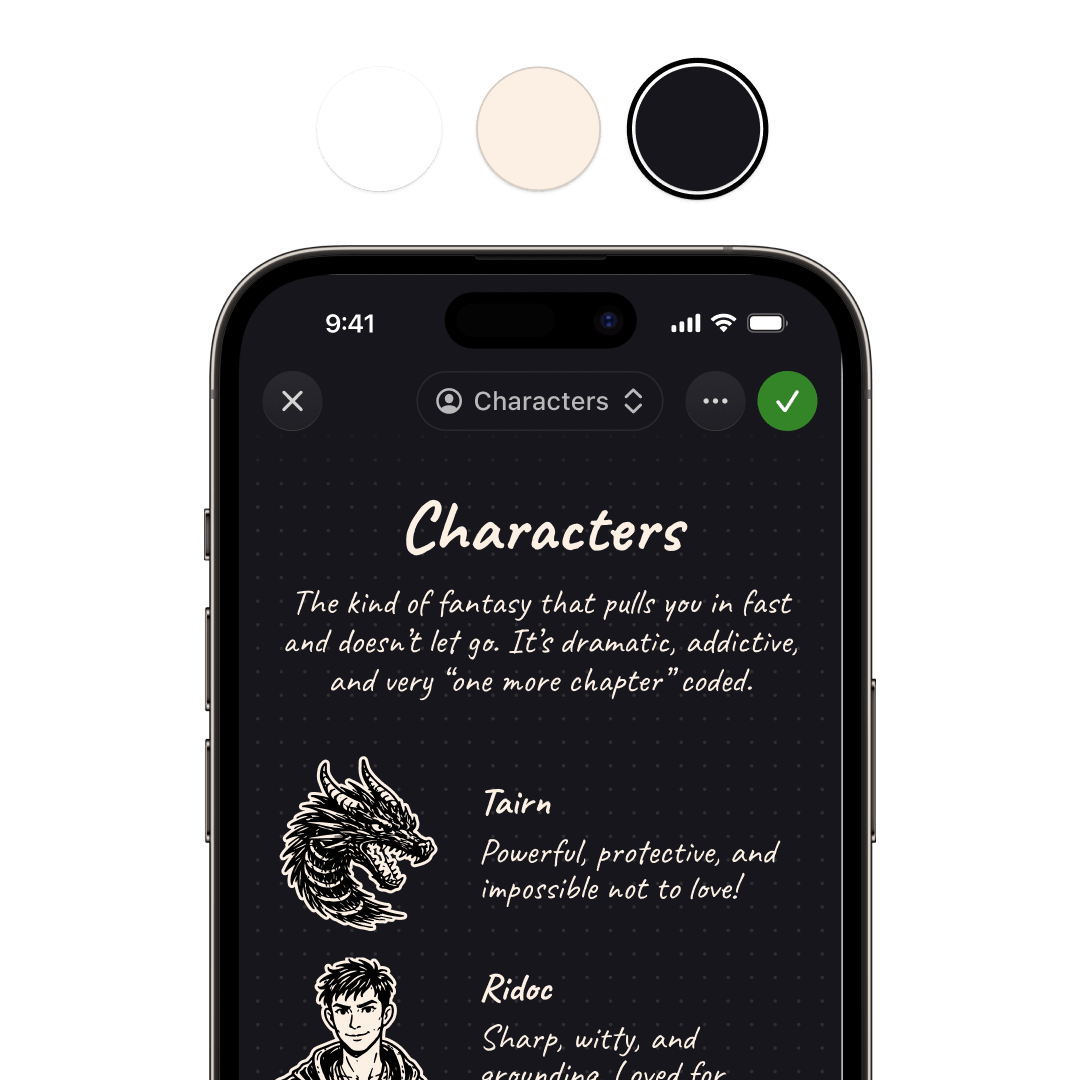
A book journal is a place to put the things that won't fit on a five-star scale. The most useful kinds of entries are also the simplest:
Quotes. The lines that stopped you. Don't paraphrase — copy them down. A quote saved in your own handwriting (or your own typing) is half-remembered already.
Characters. Two sentences about who they are and what they wanted. You will forget Marianne by next year if you don't write down that she was guarded and kind and hated being seen.
Scenes. Not summaries — moments. Chapter 17, the rooftop, the rain, her saying nothing. Those are the scenes that become a personal language between you and a book.
Questions. The things the book made you ask about your own life. These are sometimes more important than the book itself.
Reactions. A sentence or two about how it made you feel — when you read it, what was going on in your life, what it reminded you of.
A book journal isn't a reading log
The format matters. A spreadsheet of "books finished" with a star rating is a log. A folder of notes with different kinds of entries for different kinds of moments is a journal.
That's the deeper distinction. A log treats every book the same. A journal lets this book be a stack of character notes, and that book be a single underlined sentence you can't stop thinking about.
How to start one (in 10 minutes)
You don't need an app to start. You need a paper notebook, a notes app, or any tool that lets you write things down and find them later. Slovo is built for this, but the practice is independent of the tool.
For your next book:
1. Decide what you'll capture before you start reading. Try the five categories above. Don't commit to all of them — pick the two or three that feel right for this particular book.
2. Carry the journal with you. The right time to write is when the line is fresh, not three weeks later when you're trying to remember what struck you.
3. Re-read once. When you finish the book, spend 15 minutes re-reading your journal entries. This is the single highest-leverage habit in this whole practice. Most of what you'll remember a year from now comes from that one re-read.
4. Don't edit. Your entries are for you. They can be incomplete, ungrammatical, contradictory, embarrassing. The point is honesty, not polish.
Why it works
The simple answer: a journal forces you to do something with what you read, beyond reading it. The active step — writing a sentence, copying a line — converts the book from input into something more like a conversation.
The longer answer: a book journal builds a personal library of your reading life. Year three of journaling is when it gets good. You can flip back and find the quote that meant everything to you in 2024 and read it again with a 2026 brain. That's a kind of time travel a star rating cannot give you.
If you want a place to start
We made Slovo because we wanted this for ourselves. It's a private reading journal for iPhone — quotes, characters, scenes, questions, reactions, with a place for each. Free to download, your notes stay on your device.
But more than the app: start a journal. The book you're reading right now is the one you'll most want to remember a year from now.
Written by Anastasia, Slovo Co-Founder.